If you’re looking for a fresh, light, yet indulgently creamy dish, you’re going to fall head over heels for this Asparagus Egg Frittata Recipe. I absolutely love how it balances tender, bright asparagus with a rich, fluffy custard made with ricotta and parmesan — it’s like a hug on a plate. Plus, it’s perfect for brunch, lunch, or even a quick weeknight dinner. Keep reading because I’ll share all my tips for making this fan-freaking-tastic frittata turn out perfectly every time!
Why You’ll Love This Recipe
- Creamy & Fluffy Texture: Thanks to the ricotta and whole milk, this frittata is decadently moist without being heavy.
- Bright & Fresh Flavor: The asparagus shines through with just the right tender-crisp bite after blanching.
- Simple Yet Impressive: It looks stunning on the table but comes together with minimal fuss.
- Versatile Meal: Serve it hot or at room temperature, making it great for entertaining or meal prep.

Ingredients You’ll Need
Choosing fresh, quality ingredients really makes this Asparagus Egg Frittata Recipe sing. I recommend grabbing the freshest asparagus you can find—thin ones work best—and full-fat dairy for that perfect custard texture.

- Baby Asparagus: Thin spears are key here for tenderness; thicker stalks need longer cooking and might get woody.
- Eggs: The foundation of your frittata, fresh and large eggs give you the best rise and texture.
- Whole Milk Ricotta: Adds creamy richness; I always use whole milk ricotta for that luscious custard feel.
- Whole Milk: Helps thin the eggs just enough to keep the frittata tender—don’t substitute with skim or it gets watery!
- Parmesan: Provides a nutty, salty depth; freshly grated is a game changer here.
- Chives: Bright, mild onion flavor that complements the asparagus beautifully.
- Fresh Dill: Adds an herby freshness that pairs surprisingly well with eggs and asparagus.
- Dijon Mustard: Just a touch to elevate all the flavors without overpowering anything.
- Kosher Salt & Pepper: For seasoning; be sure to taste and adjust!
Variations
One of the best things about this Asparagus Egg Frittata Recipe is how easy it is to make your own. I like switching it up depending on the season and who I’m cooking for, and there’s plenty of room to play with flavors or dietary tweaks.
- Cheese Swap: I sometimes swap parmesan for feta for a tangier finish, especially when I add sun-dried tomatoes.
- Herb Mix: Try thyme or basil in place of dill if you’re craving a different fresh herb vibe—either way, it’s delicious.
- Vegetarian Boost: Add sautéed mushrooms or bell peppers for extra veggies and heartiness.
- Make it Vegan-ish: I haven’t tried a fully vegan version, but using tofu and vegan cheese in place of eggs and dairy could be fun to experiment with.
How to Make Asparagus Egg Frittata Recipe
Step 1: Preheat and Prep Your Pan
First things first, get your oven heated to 375°F and place a rack in the center. I usually use a 9-inch baking pan, and I can’t recommend lining it with parchment paper enough—it makes removing the frittata a breeze and keeps the edges nice and tidy. Don’t skimp on greasing the pan well, too; this saves you a lot of clean-up hassle later.
Step 2: Blanch the Asparagus
Bring a pot of salted water to a boil and blanch your asparagus for 1-2 minutes—you’re aiming for bright green and slightly tender but with a bit of crunch still. Then, immediately dunk them into an ice water bath to stop them from cooking any further. This trick keeps them fresh and vibrant, and trust me, it makes all the difference in the final texture.
Step 3: Whisk the Egg Custard
In a large bowl, whisk together your eggs, ricotta, whole milk, parmesan, chives, dill, and Dijon mustard. I like to whisk vigorously until everything is perfectly blended and smooth. This is the base that turns into that dreamy custard filling, so take your time here. Don’t forget to season with salt and pepper—taste is everything!
Step 4: Assemble Your Frittata
Arrange half of your asparagus in a single row at the bottom of your prepared pan, then pour over the egg mixture gently so you don’t disturb the spears too much. Lay the remaining asparagus on top in another neat row, then dollop the remaining ricotta here and there. A light sprinkle of salt and pepper over the top finishes this step. It’s so pretty already, I sometimes just want to snap a pic before baking!
Step 5: Bake Until Set and Golden
Pop the pan into your preheated oven and bake for about 28-38 minutes. Keep an eye on it after 25 minutes—you’re looking for the frittata to puff up and be just set in the center with no jiggle. Overbaking is the enemy here; I learned that the hard way one time when my frittata came out dry and rubbery. Let it cool slightly in the pan before gently lifting it out using the parchment paper.
Pro Tips for Making Asparagus Egg Frittata Recipe
- Don’t Skip Blanching: It’s essential for tender, vibrant asparagus—you’ll get a perfectly cooked texture rather than stringy or tough spears.
- Use Full-Fat Dairy: I’ve tried low-fat milk before, and the frittata wasn’t nearly as creamy or custard-like; whole milk and ricotta are the magic combo.
- Watch the Bake Time: Check your frittata starting at 25 minutes and don’t let it jiggle in the middle—this ensures tender eggs, not rubbery ones.
- Parchment Paper Hack: Lining the pan with parchment not only prevents sticking but makes lifting out the frittata effortless and keeps edges intact.
How to Serve Asparagus Egg Frittata Recipe
Garnishes
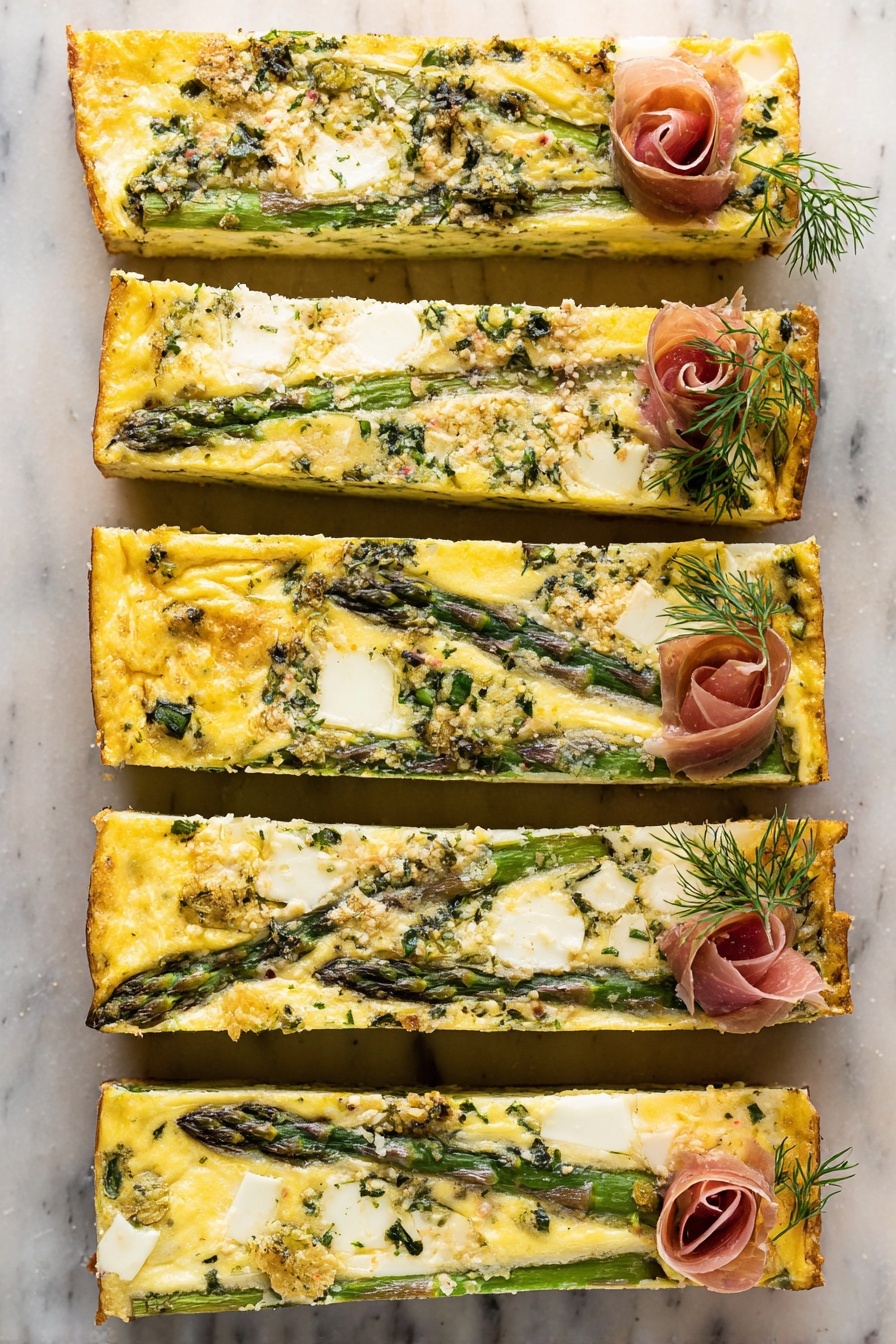
I love topping my sliced frittata with extra fresh herbs like chives and dill—it amps that fresh flavor punch right up. A sprinkle of additional parmesan adds a nice salty hit, and sometimes I’ll add thin slices of prosciutto or smoked salmon for an extra savory kick that makes it feel special.
Side Dishes
My go-to pairings are simple: a crisp arugula salad dressed with lemon vinaigrette or a handful of roasted cherry tomatoes. Both add bright, contrasting flavors that complement the richness of the frittata without overpowering it.
Creative Ways to Present
For brunch parties, I like to serve the frittata whole on a large wooden board surrounded by bowls of fresh herbs, toasted bread, and colorful veggies for guests to customize their plates. It’s not just delicious but also makes a beautiful centerpiece that invites everyone to dig in.
Make Ahead and Storage
Storing Leftovers
Once cooled, I wrap leftover frittata tightly in plastic wrap and store it in the fridge. It keeps beautifully for up to 3 days, making it perfect for quick breakfasts or lunches on the go. Just be sure to keep it covered so it doesn’t dry out or pick up any fridge odors.
Freezing
I’ve frozen slices successfully by wrapping them individually in parchment paper and then placing them in a freezer-safe container. While it’s best fresh, frozen frittata reheats well and remains surprisingly tender. Just thaw overnight in the fridge before reheating.
Reheating
Reheat leftover frittata in a 350°F oven for about 10-15 minutes or until warmed through. I avoid microwaving to help retain that nice texture and avoid rubberiness. You can add a little sprinkle of fresh herbs after reheating for a quick flavor boost.
FAQs
-
Can I use frozen asparagus for this frittata?
While fresh asparagus is ideal for its texture and flavor, you can use frozen asparagus if needed. Just make sure to thaw it completely, pat it very dry to avoid excess moisture, and blanch it briefly to keep it tender before adding to the frittata.
-
What can I substitute if I don’t have ricotta?
In a pinch, you can substitute ricotta with cream cheese or cottage cheese (well-drained) for a similar creamy texture. Just be aware that the flavor may be a bit different. Using a soft fresh cheese gives that luscious feel you want in the frittata.
-
How do I know when the frittata is done baking?
The frittata is done when it’s puffed up and the center feels set without any jiggle when you gently shake the pan. It should have a slight golden color on top but not be browned. Overbaking dries it out, so watch closely after 25 minutes.
-
Can I make this frittata ahead of time?
Absolutely! You can make the frittata a day ahead and keep it refrigerated. Just bring to room temperature or warm it gently in the oven before serving. It’s a fantastic make-ahead brunch option.
Final Thoughts
This Asparagus Egg Frittata Recipe is one of those gem dishes I always come back to when I want something both simple and special. It’s the kind of recipe that feels like a little celebration every time you make it. Whether you’re feeding a crowd or just treating yourself, I promise it’ll become a favorite in your kitchen too. Give it a try and enjoy the fresh, creamy goodness with every bite—you won’t regret it!
Print
Asparagus Egg Frittata Recipe
- Prep Time: 15 minutes
- Cook Time: 30 minutes
- Total Time: 45 minutes
- Yield: 6 servings
- Category: Breakfast
- Method: Baking
- Cuisine: American
- Diet: Vegetarian
Description
This Asparagus Frittata is a light and creamy baked egg dish featuring tender blanched baby asparagus, ricotta, parmesan, fresh herbs, and a touch of Dijon mustard for flavor. Perfect for brunch or a light meal, it’s easy to prepare and bakes to a golden, fluffy custard-like texture studded with rows of vibrant green asparagus.
Ingredients
Vegetables
- 1 pound Baby Asparagus – trimmed
Egg Mixture
- 8 large Eggs
- ¾ Cup Whole Milk Ricotta, divided (6 ounces total)
- 1/3 Cup Whole Milk
- ¼ Cup Parmesan, finely grated, plus more for garnish
- 2 TBS Chives, thinly sliced, plus more for garnish
- 1 TBS Fresh Dill, chopped, plus more for garnish
- 1 tsp Dijon Mustard
- Kosher Salt & Pepper, as needed
Optional Garnish
- Prosciutto
- Smoked Salmon
- Arugula
- Roasted Cherry Tomatoes
- Fresh Herbs
Instructions
- Preheat Oven and Prepare Pan: Position the oven rack in the center and preheat oven to 375°F. Grease a 9-inch or 8×10-inch baking pan generously with non-stick cooking spray. Line pan with parchment paper, allowing edges to hang over for easy removal.
- Blanch and Shock Asparagus: Bring a large saucepan of salted water to a boil. Add the asparagus and cook for 1–2 minutes until bright green and tender-crisp. Immediately transfer asparagus to an ice water bath to halt cooking. Drain and pat dry, then set aside.
- Prepare Egg Custard: In a large bowl, whisk together eggs, 2 tablespoons ricotta, whole milk, parmesan, chives, dill, Dijon mustard, ½ teaspoon salt, and ¼ teaspoon pepper until well combined.
- Assemble the Frittata: Arrange half the asparagus in a single row in the prepared pan. Pour the egg mixture evenly over the asparagus. Arrange the remaining asparagus in a second row on top of the eggs. Dollop the remaining ricotta over the surface and season lightly with salt and pepper.
- Bake the Frittata: Place the pan in the preheated oven and bake for 28–38 minutes, until the frittata is risen, set, and no longer jiggles in the center. Avoid overcooking to prevent dryness.
- Cool and Serve: Remove the pan from oven and cool 5 minutes on a wire rack. Use the parchment paper edges to lift the frittata out of the pan carefully. Transfer to a serving platter, slice between the asparagus spears, and garnish with additional herbs, parmesan, and optional prosciutto or other garnishes. Serve warm or at room temperature for best flavor.
Notes
- You may use a round 9-inch deep pie plate instead; adjust grease and baking time accordingly.
- If serving directly from the dish, parchment can be omitted but ensure the pan is well greased.
- Blanching asparagus is essential to keep it tender within the frittata.
- Use full-fat dairy only—whole milk, heavy cream, or half and half—to maintain creaminess. Low-fat milks will cause watery texture.
- Do not overbake; remove when eggs are just set and firm to avoid rubbery texture.
- To scale the recipe, use the serving size slider on the recipe card for adjustments.
Nutrition
- Serving Size: 1 serving (1/6 of recipe)
- Calories: 230
- Sugar: 2g
- Sodium: 250mg
- Fat: 16g
- Saturated Fat: 7g
- Unsaturated Fat: 7g
- Trans Fat: 0g
- Carbohydrates: 6g
- Fiber: 2g
- Protein: 14g
- Cholesterol: 280mg