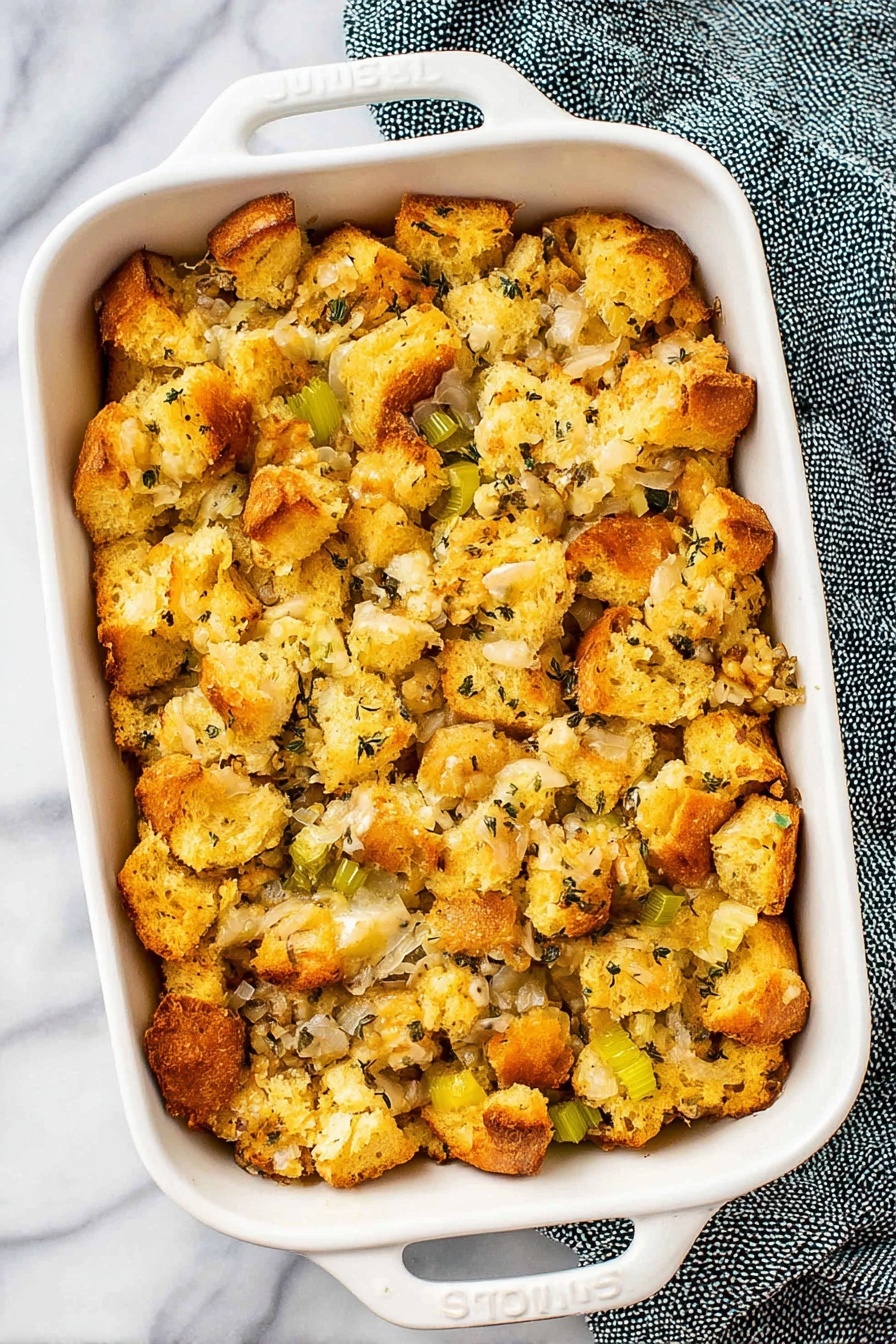
If you’re on the hunt for that perfect comfort food side dish, I can’t recommend this Homemade Stuffing Recipe with Sage and Herbs Recipe enough. It’s the kind of recipe that feels like a warm hug from your oven, packed with fresh herbs and that irresistible sage flavor we all love. Trust me, whether it’s a holiday feast or a cozy family dinner, you’ll find this stuffing becomes the star of the table every time. Stick with me here, and I’ll walk you through how to make your own homemade masterpiece that’s fresher and more flavorful than any boxed mix.
Why You’ll Love This Recipe
- Made from Scratch: Using fresh sage and herbs really elevates the flavor beyond any packaged stuffing you’ve tried.
- Customizable Moisture: You can easily tweak how moist or fluffy you want your stuffing by adjusting the broth amount.
- Make-Ahead Friendly: Prep it the day before, then bake fresh when you’re ready – perfect for busy holiday cooking.
- Comfort Food Classic: It brings nostalgia but with a fresh, homemade spin that my family goes crazy for every time.

Ingredients You’ll Need
Each ingredient in this Homemade Stuffing Recipe with Sage and Herbs Recipe plays a vital role—from the crusty bread providing the base texture to the fresh herbs that bring the aromatic magic. I always say, don’t skimp on the herbs here; the freshness is what makes all the difference. Also, choosing the right bread is key—something sturdy like Texas toast or French bread so it holds up well and crisps nicely.
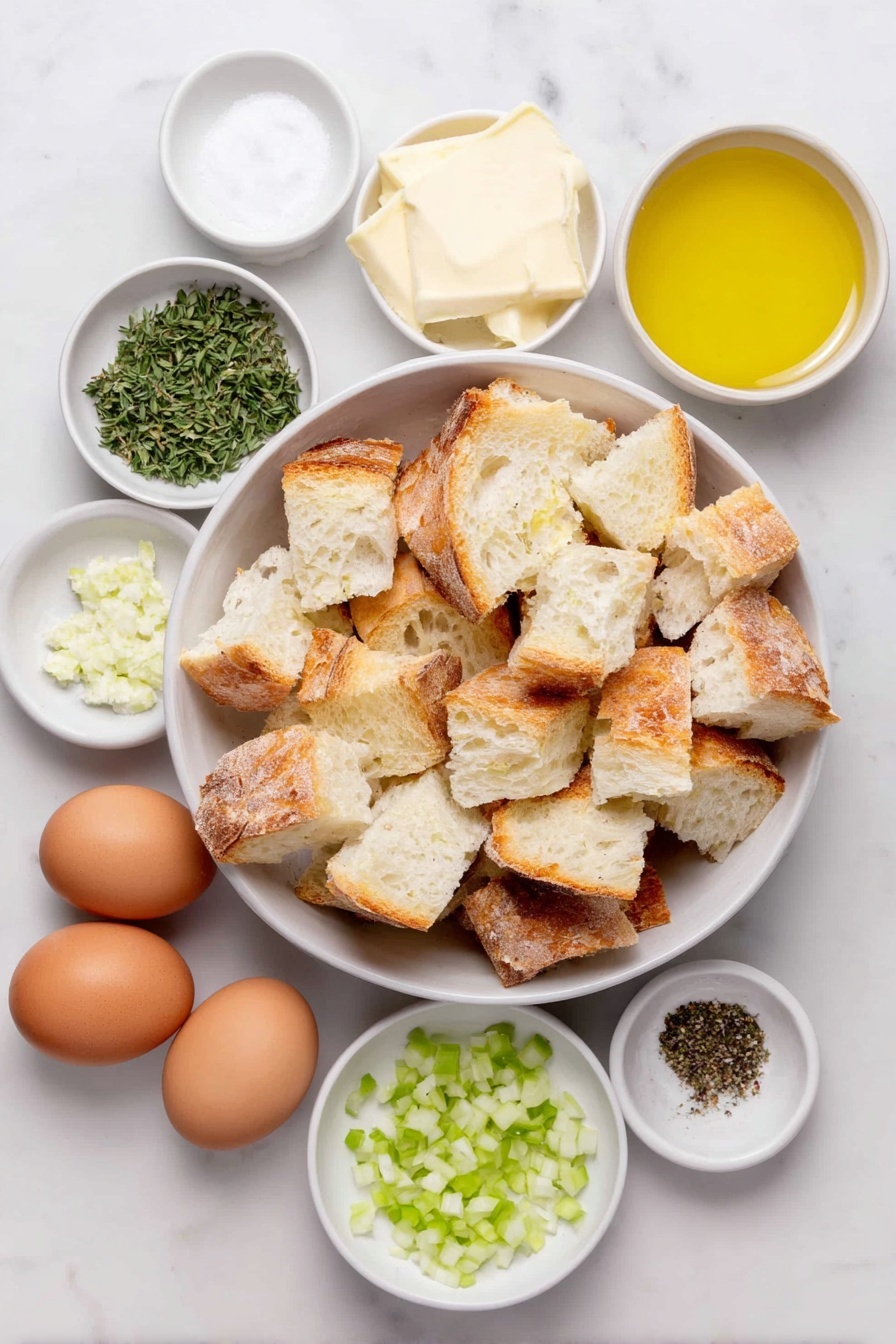
- Texas toast or French bread: Use day-old or lightly toasted to get that perfect chewy-yet-crispy texture.
- Unsalted butter: For rich flavor without overpowering the herbs; you control the salt better this way.
- Onion: Adds a subtle sweetness and depth when sautéed.
- Celery: Brings a fresh, mild crunch and balances richness.
- Kosher salt: Essential for seasoning—helps everything pop.
- Freshly cracked black pepper: Adds a mild heat and earthiness.
- Garlic: Provides that warm, inviting aroma when cooked.
- Fresh sage: The star herb here—earthy, slightly peppery, and utterly comforting.
- Fresh parsley: Brightens the stuffing with a fresh green note.
- Eggs: Help bind the stuffing so it holds together when baked.
- Chicken broth: Adds moisture and rich flavor; you can swap for vegetable broth if you want it vegetarian.
- Fresh thyme: A subtle herbaceous note that layers in complexity.
Variations
I love how versatile this homemade stuffing recipe is—it invites you to tweak and personalize it a bit. Over the years, I’ve found that a little customization can make it feel new and fresh every time you serve it.
- Sausage Addition: Adding cooked Italian sausage or breakfast sausage makes this stuffing heartier — my family adores that meaty twist for special occasions.
- Vegan Option: Swap the butter for olive oil and use a vegetable broth with flax eggs or mashed potatoes to bind for a tasty vegan rendition.
- Nutty Twist: Toasted pecans or walnuts folded in give a lovely crunch and earthy flavor that surprised and delighted me the first time I tried it.
- Fruit Flair: Toss in dried cranberries or chopped apples for a touch of sweetness that contrasts beautifully with sage.
How to Make Homemade Stuffing Recipe with Sage and Herbs Recipe
Step 1: Toast Your Bread to Crispy Perfection
Start by preheating your oven to 300°F. Spread your cubed Texas toast or French bread on a baking sheet in a single layer. Bake it slowly until it’s dry and crisp, stirring every 8 to 10 minutes to toast evenly—this usually takes around 40 to 60 minutes. This slow toasting avoids burning but gives you that satisfying crunch in your final stuffing. I like to do this step a day ahead to save time later. The key is patience here! You want the cubes dry and firm, not chewy.
Step 2: Sauté the Aromatics
Turn your oven up to 350°F. In a large skillet, melt the butter over medium heat and add diced onions, sliced celery, and minced garlic. Cook for about 4 minutes until those veggies soften and the kitchen starts smelling amazing. This step is where you build a flavorful base, so don’t rush—those softened veggies and butter are crucial for moist, savory stuffing.
Step 3: Combine Everything Gently
Pour your buttery veggie mix over the cooled toasted bread cubes and toss them gently to coat. Sprinkle in kosher salt, cracked black pepper, fresh minced sage, and parsley. Then whisk your eggs and pour those into the bowl, followed by the chicken broth. Now, gently stir everything together, taking care not to break the bread cubes too much. This is where you decide your stuffing’s moisture level—if you like it wetter, add up to ½ cup more broth. I always do!
Step 4: Bake Your Stuffing to Golden Delight
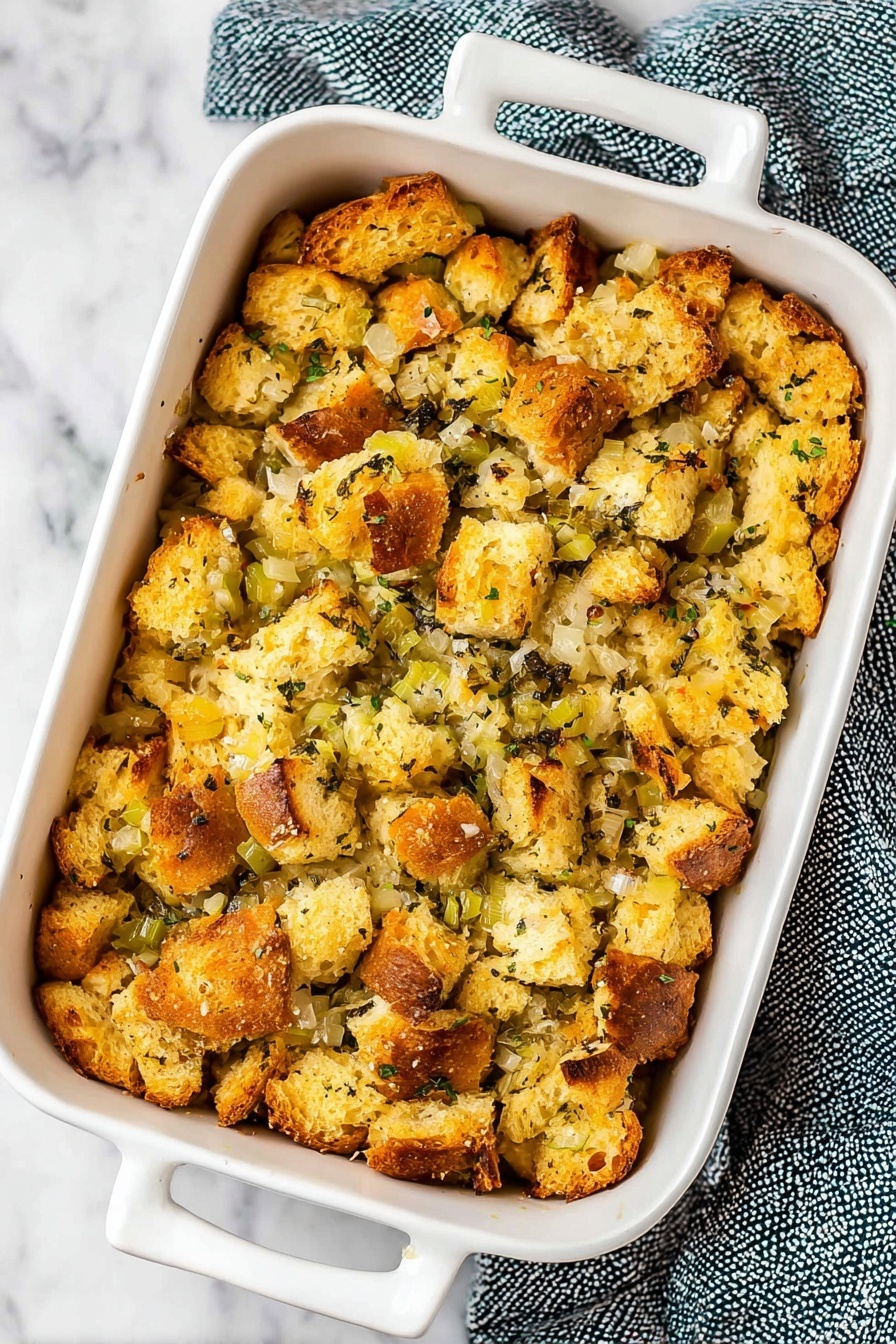
Transfer the mixture into a greased 9×13 casserole dish and cover tightly with foil. If you’re not baking immediately, no worries—you can refrigerate it for up to 24 hours, which sometimes even improves the flavor as everything melds. When ready, bake on the middle oven rack at 350°F for 30 minutes. Then remove the foil and bake uncovered for another 10-15 minutes until the top is perfectly browned and crispy. That golden crust is the best part, trust me.
Pro Tips for Making Homemade Stuffing Recipe with Sage and Herbs Recipe
- Toast Bread Ahead: I always toast the bread cubes a day before to cut down on day-of prep time—it keeps the crunch on point.
- Don’t Overmix the Bread: Stir gently to avoid breaking the bread too much, which keeps the texture interesting and prevents mushiness.
- Adjust Broth for Moisture: Depending on your preference, add broth little by little; I find a little extra broth really makes it luscious without soggy.
- Cover While Baking: The foil traps steam for soft inside, and uncovering near the end gets you that crisp golden top I love.
How to Serve Homemade Stuffing Recipe with Sage and Herbs Recipe
Garnishes
I like to sprinkle a few fresh sage leaves or chopped parsley right on top just before serving—it adds a pop of color and a hint of freshness that brightens the whole dish. Sometimes a drizzle of melted butter or a little sprinkle of Parmesan can add a nice finish, too.
Side Dishes
This stuffing pairs beautifully with classic roast turkey, of course, but I’ve also served it alongside glazed ham, roasted chicken, or even a hearty vegetable stew for a vegetarian feast. Roasted Brussels sprouts and cranberry sauce complete the plate perfectly.
Creative Ways to Present
For special occasions, I love serving the stuffing in individual ramekins or as a stuffing-stuffed roasted pepper or mushroom caps. It adds charm and makes guests feel like they’re getting something extra special.
Make Ahead and Storage
Storing Leftovers
Store leftover stuffing in an airtight container in your fridge. From my experience, it stays fresh and tasty for up to 5 days. I always make sure to cool it completely before sealing and refrigerating to keep the texture just right.
Freezing
If you want to save some for later, freezing works well too. I wrap portions tightly in foil and place them in freezer bags. When properly wrapped, the stuffing holds up nicely in the freezer for up to 3 months.
Reheating
For reheating, I cover the stuffing with foil and warm it in a 350°F oven until heated through, about 20-25 minutes. Removing the foil for the last few minutes helps regain that crispy top. Microwave reheating is quick but risks sogginess, so I stick to the oven whenever I can.
FAQs
-
Can I make this Homemade Stuffing Recipe with Sage and Herbs Recipe vegetarian?
Absolutely! Simply swap out the chicken broth for vegetable broth and replace the butter with a plant-based alternative or olive oil. Also, make sure any optional additions like sausage are substituted with plant-based versions or left out entirely, and you’ll have a delicious vegetarian stuffing that’s just as comforting and flavorful.
-
Can I prepare the stuffing ahead of time?
Yes! One of the biggest conveniences of this recipe is that you can assemble the entire dish and refrigerate it for up to 24 hours before baking. Just cover it tightly with foil and pop it in the fridge — then bake as usual when you’re ready. This not only saves time but actually lets the flavors meld together beautifully.
-
What type of bread works best for this stuffing?
I recommend using Texas toast or French bread because they’re sturdy and have a nice crust that toasts well. Day-old bread or bread you’ve dried out will absorb the broth nicely without turning to mush, which gives you that perfect balance of soft and crispy textures.
-
Can I use dried herbs instead of fresh?
You can substitute dried herbs if fresh aren’t available, but fresh definitely delivers the best flavor and aroma. If you do use dried, reduce the quantity to about one-third of what the recipe calls for fresh since dried herbs are more concentrated. Fresh sage especially makes a huge difference in this recipe!
Final Thoughts
This Homemade Stuffing Recipe with Sage and Herbs Recipe holds a special spot in my kitchen because it’s the one dish I know will always bring smiles and a sense of home to the table. I used to struggle with dry or flavorless stuffing, but discovering this fresh herb blend and perfect bread-to-broth balance changed the game for me. I truly hope you’ll give it a try and make this your go-to stuffing recipe—it’s just about the most satisfying thing to pull from the oven and share with the people you care about.
Print
Homemade Stuffing Recipe with Sage and Herbs Recipe
- Prep Time: 1 hour 15 minutes
- Cook Time: 40 minutes
- Total Time: 1 hour 55 minutes
- Yield: 8 servings
- Category: Side Dish
- Method: Baking
- Cuisine: American
Description
This homemade stuffing recipe features crispy toasted bread cubes combined with a savory mixture of onions, celery, garlic, fresh herbs, and chicken broth. Baked to golden perfection, it delivers a comforting, flavorful side dish perfect for holidays or family dinners.
Ingredients
Bread
- 8 cups cubed Texas toast or French bread, about 1 loaf
Vegetables & Herbs
- 2 cups white or yellow onion, diced
- 3 celery stalks, sliced into ¼ inch pieces
- 1 tablespoon garlic, minced
- 2 tablespoons minced fresh sage
- ½ cup minced fresh parsley
- 1 tablespoon minced fresh thyme
Dairy & Eggs
- ½ cup (1 stick) unsalted butter
- 3 large eggs, lightly beaten
Liquids & Seasonings
- 1 ½ cups chicken broth
- ½ teaspoon kosher salt
- ½ teaspoon freshly cracked black pepper
Instructions
- Toast the Bread: Preheat the oven to 300°F. Spread cubed bread evenly on a baking sheet and bake until dry and crispy, stirring every 8 to 10 minutes. This process should take 40 to 60 minutes. Remove and let cool.
- Sauté Vegetables: Increase the oven temperature to 350°F. In a large skillet or pan on the stovetop, melt butter and cook onions, celery, and garlic for 4 minutes until softened.
- Combine Bread and Vegetables: Pour the sautéed vegetable mixture over the toasted bread cubes. Toss to coat evenly. Add salt, pepper, sage, and parsley, and toss again to distribute.
- Add Eggs and Broth: In a small bowl, whisk the eggs until well beaten. Pour the eggs over the bread mixture, followed by chicken broth, stirring gently to coat without breaking the bread cubes. Add extra broth up to ½ cup if a moister stuffing is desired.
- Prepare for Baking: Transfer the stuffing mixture to a greased 9×13-inch casserole dish. Cover with foil. If not baking immediately, refrigerate for up to 24 hours.
- Bake the Stuffing: Bake covered on the middle oven rack at 350°F for 30 minutes. Remove foil and continue baking for 10 to 15 minutes until the top is browned and crispy. Serve hot.
Notes
- Store leftovers in an airtight container in the refrigerator for up to 5 days.
- This recipe can be prepared ahead of time and refrigerated for up to 24 hours before baking. Let it warm at room temperature for 30-60 minutes before baking.
- Pre-cubed and toasted bread available from grocery stores can be used as a time saver, using about 8 heaping cups.
- Bread cubes can be toasted the day before for easier preparation on cooking day.
- To toast bread cubes in an air fryer, set temperature to 300°F, placing cubes in the basket and tossing every 5 minutes; toasting takes 6 to 8 minutes per batch.
Nutrition
- Serving Size: 1 cup
- Calories: 220
- Sugar: 2g
- Sodium: 460mg
- Fat: 11g
- Saturated Fat: 6g
- Unsaturated Fat: 4g
- Trans Fat: 0g
- Carbohydrates: 25g
- Fiber: 2g
- Protein: 6g
- Cholesterol: 75mg